What Is an SDA Home? Design Standards, Features & How They’re Built in Australia
Housing was not built with disability as a focus. Many homes cannot fit wheelchairs or accept the use of ceiling hoists in the bathroom. Most properties cannot be made accessible for use by people with major disabilities. These restrictions, for Australians whose daily life is extremely functional and has very high support needs, affect the independence, safety and comfort of Australians living with extreme functional impairment or very high support needs.
Specialist Disability Accommodation (SDA) is a solution to these issues. A Specialist Disability Accommodation Australia is purpose-built or substantially modified housing that is funded through the NDIS for eligible individuals, and provides housing that meets specific functional needs. This guide will outline what SDA housing is, who can access it, the four types of SDA, the main design principles, the main features that must be included and how SDA housing will be designed and built in Australia in 2026.
What Is Specialist Disability Accommodation (SDA)?
Specialist Disability Accommodation (SDA) is a funded housing option specifically intended for individuals who have high levels of support needs or extreme functional impairment. These houses have special modifications to make them more accessible, safe and independent.
Unlike social housing or care facilities, SDA refers to the home itself. But support services such as Supported Independent Living (SIL) and personal care are funded separately. SDA homes entered the real estate market in 2016 and can incorporate special design elements such as accessible layouts, assistive technology, reinforced bathrooms and more.
Dedicated housing funding is allocated to those eligible for SDA to make payments towards rent and living expenses. All SDA providers will need to be registered with the NDIS, and all SDA dwellings will need to be enrolled with the NDIA before occupancy.
As of 30 September 2025, the NDIS supports 751,446 participants across Australia. The SDA sector has also seen strong growth, with total SDA support increasing from $395 million to $592 million over two years, while annual SDA payments rose from $242 million to $481 million.
According to the latest government data, 25,274 participants have SDA funding. Of these, 15,518 are currently living in SDA homes, while 9,756 are actively seeking suitable SDA accommodation, highlighting the continued demand for specialist housing across Australia.
Who Qualifies for SDA Housing?
One of the most important questions is who qualifies for SDA housing. SDA funding is reserved for participants with the highest levels of disability-related support needs. Only a small number of people are eligible for the NDIS. You need to know about the key criteria and evidence requirements during the assessment process to understand eligibility.
Criterion 1: Extreme Functional Impairment or Very High Support Needs
For SDA eligibility NDIS Australia, participants must have significant disability-related limitations that hamper daily living activities.
Examples include:
- Reliance on powered wheelchairs
- Requirement for ceiling hoists
- Complex medical equipment needs
- Significant behavioural support requirements
- Dependence on extensive daily physical assistance
Criterion 2: SDA Must Be the Most Appropriate Solution
The NDIS must be able to determine that SDA is the most effective and cost-efficient housing option when considering other options like home modifications or standard housing arrangements.
Evidence Required
Applications commonly require:
- Occupational Therapist functional assessment
- Medical reports and specialist evidence
- Housing or Functional Capacity Assessment
- Documentation showing why standard housing is unsuitable
To find out more about funding pathways and eligibility criteria, and how to apply for the NDIS, please see the SDA eligibility and NDIS application guide.
Practical tip: Most of the evidence needed will typically be for High Physical Support applications. It is important to obtain the documentation of the Occupational Therapist and medical professional at an early stage to prevent delays in plan review.
SDA Categories Explained: The 4 Design Types
The SDA Design Standard contains four levels: Improved Liveability, Fully Accessible, Robust and High Physical Support. They are all structured to address various disability needs. The housing options and funding that are available will be determined by the category and type of building listed in an NDIS plan.
Improved Liveability
The improved liveability SDA category is for individuals with a diagnosis of autism, sensory sensitivities, intellectual disability or cognitive impairments who prefer a simple-to-navigate environment.
Key features:
- High-contrast finishes
- Open-plan layouts
- Task lighting
- Tactile indicators
- Slip-resistant flooring
Fully Accessible
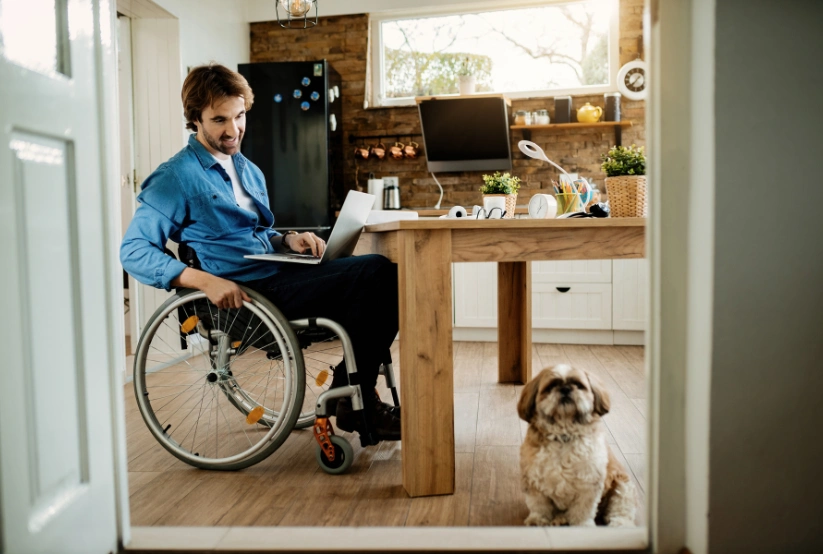
The fully accessible SDA home category is designed for those who have a great deal of mobility restrictions, such as wheelchair users.
Key features:
- Step-free access
- Wide doorways
- Roll-in showers
- Accessible kitchens and bathrooms
- Accessible outdoor spaces
Robust
The robust SDA housing category is for people who have behaviours and actions that may endanger themselves, others, or property.
Key features:
- Impact-resistant materials
- Reinforced doors and fittings
- Sound insulation
- Secure outdoor areas
- Reduced sensory stimulation
High Physical Support
This is the highest category in the SDA classification. It is for individuals with more complex physical and medical support needs.
The required high physical support SDA features are as follows:
- Ceiling hoist provisions
- Emergency backup power
- Assistive technology
- On-site Overnight Assistance room
- Automated controls and communication systems
SDA Design Standards Explained
All SDA homes are required to be designed according to a certain standard before they are eligible to be enrolled with the NDIA. These standards guarantee that homes are safe, accessible and appropriate for the needs of the participants.
What is the SDA Design Standard?
The SDA Design Standard is the official NDIS framework that outlines the requirements for all new SDA dwellings. It complements the National Construction Code (NCC) and AS 1428.1, but in some cases will include additional category-specific requirements.
Prior to enrolment, all SDA homes, with the exception of those located in North-East Sydney, will be assessed and certified independently. The SDA design standard NDIS 2026 review is considering revisions to various aspects, including assistive technology, acoustics, and outdoor access, so it’s crucial for providers and developers to be updated on these changes.
Top SDA Accessibility Features to Include in Homes
Accessibility features are the foundation of every quality SDA home. Requirements vary across SDA categories NDIS, but there are a number of design elements that will enhance safety, independence, and lasting function. Here are some of the most vital features:
- Wide, step-free doorways and transitions to allow safe movement throughout the home.
- Roll-in and hobless wet areas that support wheelchair-friendly bathroom access.
- Ceiling hoist infrastructure to promote safer transfers with minimal manual handling.
- Emergency backup power to keep critical medical and support equipment operational during outages.
- Assistive technology infrastructure to take care of automation, communication, and environmental controls.
- Luminance contrast and wayfinding that improve navigation for people with visual or cognitive impairments.
- Impact-resistant materials in Robust SDA environments.
- Accessible outdoor spaces to encourage community participation and well-being.
- Onsite Overnight Assistance accommodation to provide a dedicated space for support workers where required.
- Future-proofing flexibility to let homes adapt as participant needs evolve.
How SDA Homes Are Designed and Built in Australia
Building an SDA home Perth WA involves a highly regulated process that extends well beyond standard residential construction. Every stage must align with NDIS requirements, accessibility standards, and independent certification requirements. The steps below outline how SDA projects typically progress from concept to occupancy.
Step 1: Establish Participant Need and SDA Category
Assessments by health and service providers are the first step in the process to determine the needs of the person for housing and support. The design, layout and features of the home will be determined by the approved SDA category.
Step 2: Engage an SDA-Experienced Designer
A knowledgeable SDA builder Perth can guarantee that the home will comply with and meet all accessibility regulations and requirements from the outset. Business planning can help prevent expensive alterations that come after the initial design stages.
Step 3: Engage an SDA Assessor Early
An independent SDA assessor will be available from the design phase to ensure that any potential compliance concerns are identified before NDIS SDA housing Perth construction work begins. This can facilitate the process of certification and limit delays at completion.
Step 4: Obtain Approvals
The project needs to obtain all necessary planning, development approvals and building approvals prior to the beginning of construction. Local Council requirements and NDIS regulations need to be met.
Step 5: Construct the SDA Home
The home is built by specialist home builders in Perth according to the approved SDA category and design standards. Documentation is kept throughout the build for final certification.
Step 6: Independent Certification and NDIA Enrolment
After the dwelling has been built, an independent assessor is responsible for inspecting and certifying that the dwelling has been constructed in accordance with the SDA Design Standard requirements. Once certified, the home can be registered with the NDIA and made available to participants.
The time to get a new SDA home ready, from design to enrollment, is roughly 12–24 months in general, depending on the complexity and approval process.
Conclusion
SDA housing provides safe, accessible and independent living places for Australians who have significant disability. It is important for participants, support coordinators, providers and investors to have a good understanding of the SDA categories and design standards. At BODA Building Group, we have experience building SDA-compliant homes throughout Perth and WA. Please give our team a call to get a no-cost consultation regarding your SDA project.