Is Your Perth Deck Ready for Spring? 9 Signs It Needs Repair or Replacement
Every year in Perth, around August or September, we get a wave of calls that start the same way: “We’re planning a barbecue for October and just walked out on the deck properly for the first time since winter. It doesn’t feel right.”
Months of rain and trapped leaves, combined with wet and dry spells, will mean those boards that have lasted the summer become soft, uneven and unsafe. Perth winters might not be too bad. But after an extended period of time, moisture will cause your deck in Perth to swell, mould and start to decay before the warmer days come and reveal the problems.
Perth’s Mediterranean climate subjects decks to two periods of damage: wet winters from June to August, when timber absorbs moisture and swells, followed by rapid spring drying that can split and cup weakened boards. This guide covers the warning signs to check before spring.
What Perth Winter Does to Your Timber Deck
Perth winter affects timber mainly through prolonged moisture followed by repeated drying, which can gradually weaken both the decking and the structure underneath. Before looking at the warning signs, it helps to understand where that damage starts and why some parts of Perth decking deteriorate faster than others.
The main causes to look out for are:
- Moisture absorption: Wood swells as it absorbs moisture and shrinks as it loses moisture. Constant movement puts pressure on the wood fibres, thereby weakening the board.
- Wet winter conditions: Perth winter deck damage can lead to mould, swelling, and deterioration, especially in areas that retain moisture.
- Strong summer UV: As the weather gets warm, the UV rays dry out the wood, causing damage to existing cracks on its surface.
- Wet-dry cycling: Boards drying unequally can warp, cup or crack. Warped edges may also cause people to trip on them.
- Poor ventilation: Low decks with poor ventilation under the floor may stay damp for an extended period and cause deterioration of the joists, bearers and posts.
- Coastal exposure: The suburbs like Cottesloe, Scarborough, Hillarys and Fremantle must also contend with salty air that can accelerate rusting around fixings and structural fittings.
- Trapped organic debris: Dirt and leaves can cause dampness to the wood in shady places that get no sun.
As experienced professionals offering residential carpentry services, we always pay close attention to shaded, south-facing sections because they tend to stay damp for longer after winter rain. That is often where mould and early rot become visible first.
The 9 Signs Your Perth Deck Needs Attention Before Spring
If your deck exhibits any of these symptoms, then you should investigate before starting to entertain in the spring. Begin with a simple decking inspection, then move on to identifying any signs of deterioration below the surface.
Before going through each sign separately, there is one simple test you can perform to start out with. Push a screwdriver up against some of the boards and wood in between the posts. If the tip penetrates easily into wood that is supposed to be hard, then there might be deterioration. This is only a preliminary check, so significant softness or movement should be assessed by a professional.
Sign 1: Soft Spots or Sponginess Underfoot
A soft, bouncy or slightly springy board is one of the surefire red flags. Wood decking has to endure cycles of wetness and warmth, which means that any board that compresses when pressure is applied to it should be taken into account.
Softness may also be a sign of decay in the joist below it. That is the reason why our Perth outdoor carpentry experts always inspect the substructure when they see more than one soft board.
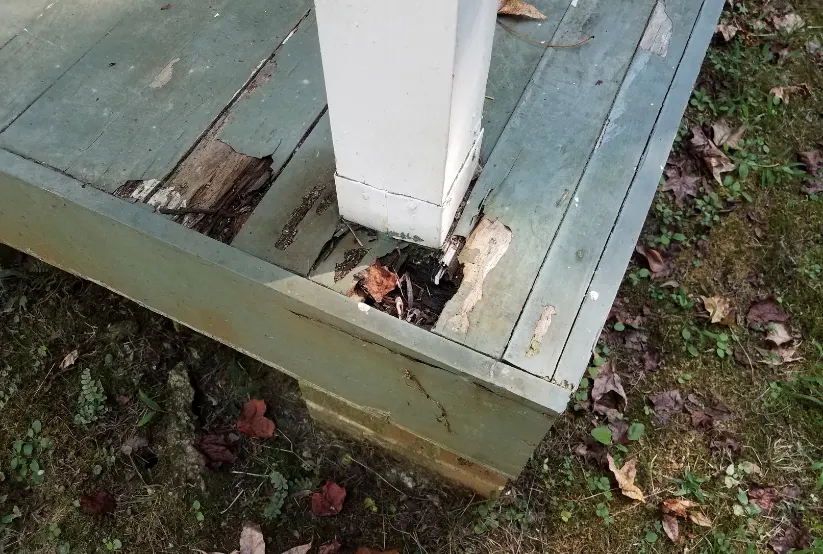
Sign 2: Visible Rot at Board Ends or Post Bases
The ends of boards and the base of posts are more susceptible to rot due to the ability of end-grain wood to easily soak up moisture. Professional decking contractors from our team will inspect the area where the deck attaches to the house in case the flashing or drainage systems have been compromised. Speaking from experience, dark, flaky, or soft wood in these regions suggests potential rot problems.
Sign 3: Cupping and Warping Boards
Boards that curve up or bend along their length have been exposed to moisture and subsequent drying without proper safeguards. We often deal with isolated cupping by board replacement. But warping is more serious since it suggests prolonged exposure to moisture, lack of drainage and missed deck maintenance.
Sign 4: Mould, Mildew or Dark Staining That Will Not Wash Off
Debris from leaves and other organic materials tends to keep moisture on wood even during winter. The mould found on healthy and sealed wood may still be manageable, but the stains that remain even after cleaning could mean there is moisture penetrating the wood.
Take special care of the shaded portions where the wood does not dry fast. Coastal conditions can make this problem more persistent. If water continues to pool in the same area, experienced deck builders in Perth from our team can check whether the problem is caused by poor drainage, movement in the structure or an inadequate fall.
Sign 5: Nails or Screws Pushing Through the Surface
Both raised screws and nails are a safety hazard and a helpful indicator for diagnosis. Boards can move as they swell, shrink or deteriorate, while fixings can loosen or corrode. If the nail has become elevated due to the decaying wooden plank beneath it, merely hammering it back into place will not help deal with the root cause of the problem. The board and fixing need to be assessed together.
Sign 6: Boards Splitting or Cracking Along the Grain
Long cracks along the grain of the wood may form due to cycles of moisture and drying. Excessive exposure to sunlight during spring may exacerbate any cracks that are already present since the weakened wood will dry up quickly. Surface cracks on solid wood planks can be fixed with deck repair, but cracks that run deep into the wood are a problem that requires replacement.
Sign 7: The Deck Feels Unstable, Bouncy or Makes Structural Noise
Deck sagging, unnecessary movement, swaying or cracking sounds when stepping on it are some of the key indicators that there is something wrong. These symptoms can point towards problems with joists, bearers, bracing, posts or footings.
This is where inspecting the boards alone can become deceptive. The deck may seem fine while the frame beneath has been degrading for many years. If the frame is unstable, the deck should not be used until it is inspected.
Sign 8: Persistent Water Pooling in One or More Areas
Water should drain off the deck to prevent standing water in one place. Standing water is a sign of bad drainage, movement, settling, or wrong grading. Longer periods of water exposure mean more opportunities for deck boards rotting and moulding. Finding the cause matters as much as replacing any damaged board.
Sign 9: Discolouration, Greying or Significant Surface Wear
Faded wood is typically an indication that the UV and moisture protection has faded. Fading, peeling paint or stain, and roughness are indications that the deck requires refurbishment. Yet, it is not necessary that grey wood needs to be replaced. If the boards and subframe remain structurally sound, deck restoration through sanding, cleaning and re-oiling can often bring an older hardwood deck back to life.
Get a Deck Repair & Replacement Quote for Free!
Deck Repair or Replace? How to Make the Right Call for Your Perth Deck
The condition of the subframe is usually more important than the appearance of the boards when deciding between repair and replacement. The table below shows how common problems can point towards different solutions while giving you an indication of the likely work involved.
| Problem found | What it may indicate | Condition of the deck | Recommended direction | Priority for action | Indicative cost |
| 1 to 2 soft boards | Moisture has affected a small section of decking | Damage appears localised | Replace affected boards | Moderate | $400 – $900 |
| Softness across more than 30% of the deck | Decay may have spread through the supporting joists | Significant structural deterioration | Replace the frame | High | $8,000 – $20,000+ |
| Raised nails or screws with otherwise sound boards | Fixings have loosened as the timber has moved | Boards remain structurally usable | Re-fix the existing decking | Low to moderate | $500 – $1,500 |
| Rot affecting 1 to 2 bearer ends | Moisture has entered a limited structural area | Localised frame damage | Strengthen or repair affected bearers | Moderate | $1,200 – $3,000 |
| Rot affecting several bearer or joist ends | Ongoing moisture has affected multiple structural members | Widespread frame deterioration | Replace the subframe | High | $6,000 – $18,000 |
| Corrosion affecting one stirrup | Isolated deterioration of a support connection | Most of the frame may remain sound | Replace the affected stirrup | Moderate | $300 – $700 per post |
| Corrosion across multiple stirrups or bolts | Age, moisture and coastal exposure have affected structural hardware | Widespread connection deterioration | Replace the frame | High | $8,000 – $22,000 |
| Termite damage confirmed | Timber members have been compromised by termite activity | Extent requires individual assessment | Treat the infestation and replace affected members | High | Varies, plus $2,000 – $15,000+ |
| Noticeable movement or sway | Bracing, footings or other structural elements may have failed | Structural stability is compromised | Replace or reconstruct the frame | Urgent | $8,000 – $25,000 |
| Unstable or non-compliant balustrade | Age, movement or deterioration has affected the barrier | Safety of the balustrade is compromised | Repair or replace affected sections | High | $1,500 – $6,000 |
| Rot around the ledger | Moisture has affected the connection between deck and house | Important structural junction is compromised | Replace the ledger and address flashing | High | $1,500 – $5,000+ |
So, when to repair or replace decking? Replacing boards makes sense when the frame underneath remains sound. If the structure itself has deteriorated, new boards will only cover the problem temporarily. If you are uncertain, a professional inspection by our Perth carpentry contractors before committing to either option can prevent unnecessary work.
Deck Repair Cost Guide: Perth 2026
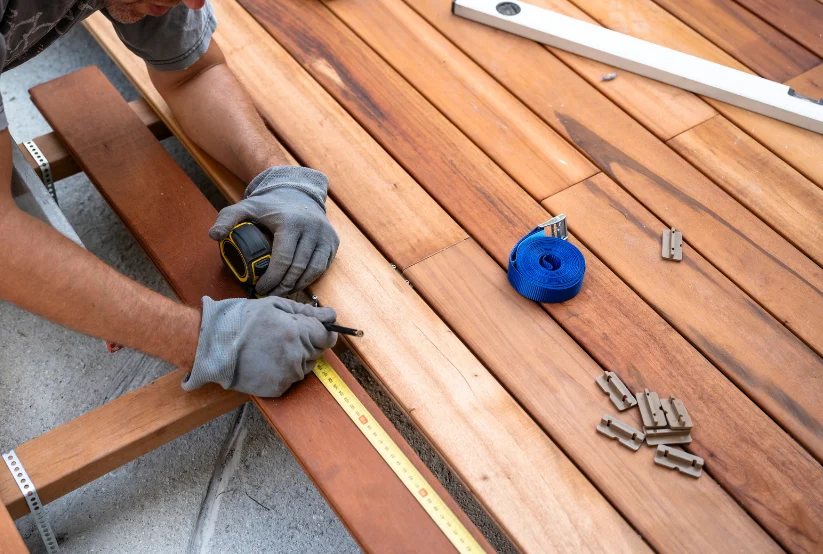
From simple deck restoration to complete rebuild, the cost can range between $25 to 600/m². Deck repair cost depends on the size, access, materials and extent of damage. Talking about costs, we can only refer to a cost range, as each project requirement will be different.
The following figures provide a starting point for common jobs, while a site inspection is needed for an accurate project quote.
| Service | When it may be appropriate | Main work involved | Factors that can change the final price | Typical Perth cost |
| Deck restoration | Hardwood decking is weathered but remains structurally sound | Remove the weathered surface, sand the timber and apply fresh oil | Deck size, timber condition and site access | $25 – $65/m² professional |
| Individual board replacement | Rot, splitting or other damage is confined to selected boards | Remove failed boards and install suitable replacement decking | Number of boards, timber selection and labour access | Per-board plus labour |
| Deck re-fixing and strengthening | Existing boards are loose or the structure needs minor strengthening | Re-screw decking, add required fixings and strengthen the frame where necessary | Extent of movement and amount of remedial work | Labour-based, half-day to a day |
| Complete deck rebuild | The existing structure is too deteriorated to retain | Remove the existing deck and construct a new frame and decking | Deck dimensions, site access, materials and structural requirements | $250 – $600/m² (as new) |
Hire Perth’s Local Carpentry Experts Today!
Conclusion
Nine out of ten times, homeowners from Perth who call our carpentry experts in October, just before they intend to make use of their deck, first realised something back in August and thought they could attend to it later. The actual inspection process takes about twenty minutes, but identifying problems at the earliest stage may determine whether you need to perform a minor or major repair job. If any of these nine signs look familiar, now is the right time to call for inspection and repair work for a spring-ready deck. Contact BODA Building Group now.
Disclaimer: All costs mentioned in this article are estimates only. Actual prices can vary depending on the deck’s size, materials, access, extent of damage, labour requirements and project specifications. A site inspection and written quote should be obtained for accurate pricing.